A perm can look beautifully effortless on day one, then start feeling dry, puffy, or oddly flat a week later if the aftercare is off. That is why good perm aftercare tips matter just as much as the service itself. A well-shaped perm is not only about creating curl – it is about keeping the hair healthy enough to hold that shape gracefully in daily life.
At a salon level, the goal is never just texture for texture’s sake. The goal is wearable movement, softness, and a finish that still looks refined on an ordinary workday. That is especially true for Korean-inspired perms, where the result is often meant to feel airy, polished, and easy rather than overly tight or obviously processed.
Why perm aftercare tips make such a difference
A perm changes the internal structure of the hair so it can hold a new pattern. That chemical change is what makes the curl possible, but it also leaves the hair more vulnerable to dryness, frizz, and breakage if you treat it like untouched hair. Many clients assume the hard part is over once they leave the salon. In reality, the next few weeks are when your home routine starts deciding how long the result will stay beautiful.
The other reason aftercare matters is that not all perms behave the same way. A soft digital perm, a cold perm, and a stronger texture-focused perm can each need slightly different handling. Hair that is colored, bleached, fine, or naturally coarse also responds differently. So while there are universal rules, the best routine is always slightly personalized.
The first 48 hours are where most mistakes happen
If you remember only one thing, remember this: do not rush the first wash. Freshly permed hair needs time to settle into its new shape. Washing too soon can interfere with the curl pattern and reduce definition before the hair has fully stabilized.
During that early window, avoid tying the hair tightly, clipping it in ways that create dents, or tucking it behind the ears for long periods. Small habits can leave the curl setting unevenly. Sleeping carefully also helps. A smooth pillowcase and loose hair placement are often better than pinning or twisting the hair up.
This stage can feel inconvenient, but it is temporary. Giving the perm a calm start usually pays off in a more consistent result.
Choose shampoo and conditioner with moisture in mind
One of the most practical perm aftercare tips is also one of the most overlooked: your regular shampoo may suddenly be too harsh. Strong cleansers can strip away moisture, and permed hair tends to show dryness quickly. That dryness often gets mistaken for “frizz problems” when the real issue is dehydration.
A gentle, sulfate-free or low-stripping shampoo is often a better fit, paired with a conditioner that adds slip and softness without making the hair limp. The balance matters. Heavy products can weigh down a looser perm, especially if you want that airy Korean-style movement. Products that are too light, though, may not give enough support to coarse or chemically treated hair.
If your hair was also colored or bleached, moisture becomes even more important. In that case, alternate between your daily conditioner and a richer treatment mask so the curl stays flexible instead of crunchy or rough.
Drying technique affects your curl more than most products do
Many people focus on what to apply and forget how much their drying method changes the final look. Rubbing permed hair aggressively with a towel lifts the cuticle and pushes the hair into frizz. A better approach is to gently squeeze out water with a soft towel or microfiber cloth.
After washing, avoid brushing the hair while it is forming its curl pattern. Use your fingers or a wide-tooth comb if needed, and work carefully from the ends upward. Then encourage the curl shape with your hands. Scrunching lightly can help, but do not overwork it.
Air-drying can work well for some perms, especially when you want a natural, soft finish. Diffusing on low heat is useful when you need more definition or faster drying time. The key is moderation. High heat can make the hair dry and cause the curl to loosen over time, particularly on hair that is already sensitized.
Heat styling is not off-limits, but it needs restraint
Clients often ask whether they can still use a curling iron or straightener after a perm. The honest answer is yes, sometimes – but carefully. Repeated high heat can weaken the new pattern and add stress to hair that has already been chemically processed.
If you occasionally refine the fringe, smooth the ends, or reshape a few sections, that is very different from flat ironing the entire head every morning. When heat is necessary, use a heat protectant and keep the temperature controlled. Fine or damaged hair usually needs much less heat than thick, resistant hair.
A perm should reduce your styling workload, not create a new dependency on hot tools. If you find yourself needing heavy heat every day to make the perm look good, the issue is usually the routine, the haircut, or the product choice rather than the hair itself.
Product layering should stay light and intentional
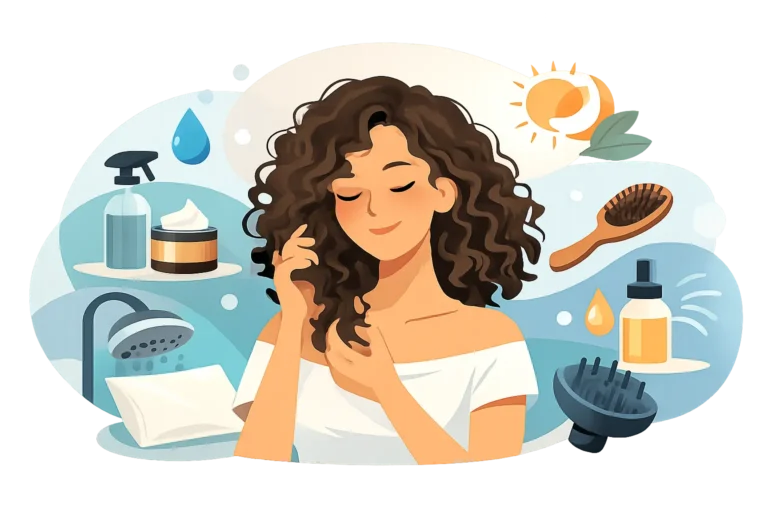
A common mistake after a perm is using too many styling products at once. Cream, mousse, oil, serum, spray, and wax can quickly build up and make curls look stringy or dull. Most permed hair responds better to a simple routine built around moisture, shape, and frizz control.
For looser perms, a lightweight curl cream or soft styling essence can be enough. For stronger curls that need hold, a mousse or defining foam may help maintain structure without stiffness. Oils can be useful on dry ends, but too much oil often collapses curl definition.
This is where technique matters as much as formula. Apply products to damp hair, distribute evenly, and stop before the hair feels coated. You can always add more once it dries, but it is harder to reverse heavy buildup.
Trims keep the perm looking polished
A perm does not erase the need for shape maintenance. In fact, the haircut becomes even more important once texture is added. When the ends become dry, split, or uneven, the entire style can start looking bulky or undefined.
Regular trims help the curl pattern sit better and prevent the weight distribution from becoming awkward. This matters especially with layered Korean perms, where movement and silhouette are part of the design. Hair that is too heavy in the wrong places can drag the wave down, while over-thinned ends can make it look fuzzy.
If your perm starts looking different after a few weeks, it does not always mean the curl is failing. Sometimes it simply needs a shape adjustment.
Protect your hair from everyday stress
The long-term success of a perm often comes down to ordinary habits. Sun exposure, chlorinated water, hard water, rough brushing, and constant friction from helmets or tight ponytails can all affect how the hair feels and behaves. None of these things will instantly ruin a perm, but repeated stress adds up.
If you swim often, wetting the hair first and rinsing it well afterward can reduce dryness. If you spend a lot of time outdoors, UV protection for hair is worth considering, especially for color-treated strands. If you wear your hair up for work, keep the style loose enough that it does not crush the curl pattern at the same points every day.
Healthy-looking texture is rarely about one miracle product. It is usually the result of small, consistent choices.
When your perm feels dry, flat, or frizzy
Not every issue means the perm was done badly. Dryness may point to product mismatch. Flatness can happen when the hair is too heavy, over-conditioned, or styled downward while drying. Frizz often comes from rough handling, lack of moisture, or heat damage.
The best response is to diagnose the actual cause before changing everything at once. If the hair feels rough, focus on conditioning. If the curl is disappearing at the roots but holding at the ends, the haircut or growth pattern may be part of the issue. If one side behaves differently from the other, sleeping habits and daily styling are often involved.
This is also where professional follow-up matters. A thoughtful salon will look at the condition of the hair, the type of perm used, and your home routine before recommending the next step. At Somi Hair Korean Salon JB, that kind of precision matters because the goal is not just a stylish result in the chair, but hair that stays elegant and manageable after you leave.
The best perm aftercare tips are the ones you can actually follow
A realistic routine always works better than an ideal routine you cannot maintain. If your mornings are busy, choose one or two reliable styling products instead of a complicated regimen. If your hair is fine, keep moisture balanced so the curl stays soft without going flat. If your hair has been through bleach or frequent coloring, be more conservative with heat and more generous with repair.
Beautiful permed hair should not feel high-maintenance in a punishing way. It should feel supported, healthy, and easy to wear. When aftercare is done well, the result is not just longer-lasting curls. It is the confidence of hair that still looks polished on ordinary days, which is usually what matters most.